


Why Are Custom Contact Lens Fittings Important for Keratoconus?
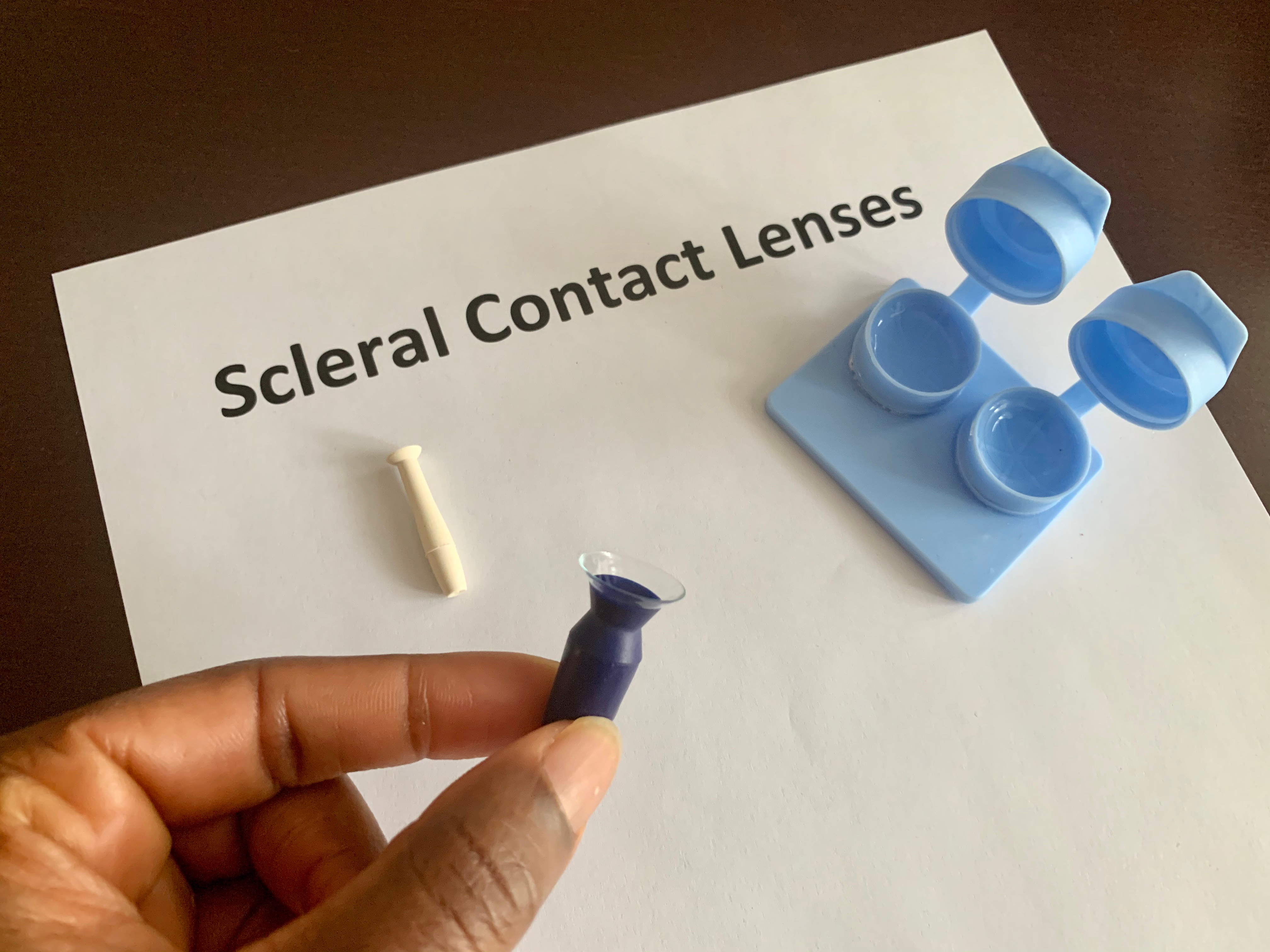
Keratoconus causes the cornea, the clear front surface of the eye, to thin and develop an irregular, cone-like shape. As the cornea changes, vision can become blurry or distorted, and glasses or standard contact lenses may no longer provide adequate correction. At Refined Eyecare Optometry, we offer specialty contact lens evaluations to help patients with keratoconus explore options for clearer, more comfortable vision.
Why Standard Contact Lenses May Not Fit Properly
Most conventional contact lenses are designed for relatively regular corneal surfaces. Keratoconus creates an uneven shape that can make these lenses shift, fit poorly, or fail to correct irregular astigmatism. Patients may experience fluctuating vision, glare, discomfort, or difficulty keeping a lens centered.
A custom contact lens fitting considers the actual shape of your cornea rather than relying on your prescription alone. This is especially important because keratoconus can affect each eye differently and may change over time.
What Happens During a Custom Contact Lens Fitting?
During a specialty fitting, we evaluate your vision, corneal shape, and eye health to determine which lens design may work best. Corneal measurements help guide lens selection, while trial lenses allow us to assess movement, alignment, and how well you can see.
We also discuss your daily activities, comfort concerns, and experience with previous contacts. The initial lens may need adjustments before the fit and prescription are finalized. Taking this individualized approach helps us balance visual clarity, comfort, and the health of the corneal surface.
Which Specialty Contact Lenses Can Help?
Several contact lens designs may be considered for keratoconus, depending on its severity and your individual needs:
- Scleral lenses: Larger lenses that vault over the irregular cornea and rest on the white part of the eye, creating a fluid-filled space that may improve comfort and vision.
- Rigid gas-permeable lenses: Firm lenses that create a smoother optical surface to correct distortion from an irregular cornea.
- Hybrid lenses: Lenses with a rigid center and soft outer skirt, combining optical correction with added comfort.
- Custom soft lenses: Specially designed lenses that may be suitable for certain mild or moderate cases.
The right option depends on corneal shape, lens stability, tear film, and how your eyes respond during fitting.
Why Follow-Up Appointments Matter
Custom fitting does not end when your lenses arrive. Follow-up visits allow us to check vision, comfort, lens positioning, and the condition of your eyes after you have worn the lenses. If a lens causes redness, irritation, or blurred vision, it may need to be reassessed rather than worn through the discomfort.
Because keratoconus can progress, periodic evaluations also help us determine whether a fitting needs to be updated. Specialty contacts correct vision while they are worn, but they do not stop keratoconus from progressing. If progression is a concern, we can discuss whether a referral for corneal cross-linking evaluation is appropriate.
To schedule a custom contact lens fitting for keratoconus, contact Refined Eyecare Optometry in Torrance, CA at (310) 214-0409.


MAP
© 2026 Refined Eyecare Optometry. All Rights Reserved. Accessibility Statement - Privacy Policy - Sitemap
Powered by: 